Every coach, five steps.
Then the whistle.
Ninety-six volunteer coaches, most of them parents, and not one of them on a field until the five steps are done. The steps are public, the count per age group is public, and the annual re-training date is on the calendar.
The five steps
The form below: who you are, which age group, whether you have coached before. Five minutes.
Through the governing body's screening provider, on their secure form, with your consent. We see "cleared" and a date, nothing else. Every two years.
The governing body's online course, about 90 minutes. Every year, before the season.
A free online course on recognising a head injury and what to do. Every year.
One evening at the park: the club's rules, the two-adult rule, how a practice runs, where the first-aid kits are.
These are the club's own steps, written from the governing body's published requirements for this sample. A real club's steps are set by its governing body, its insurer and its state; this page reports a practice, it does not advise one.
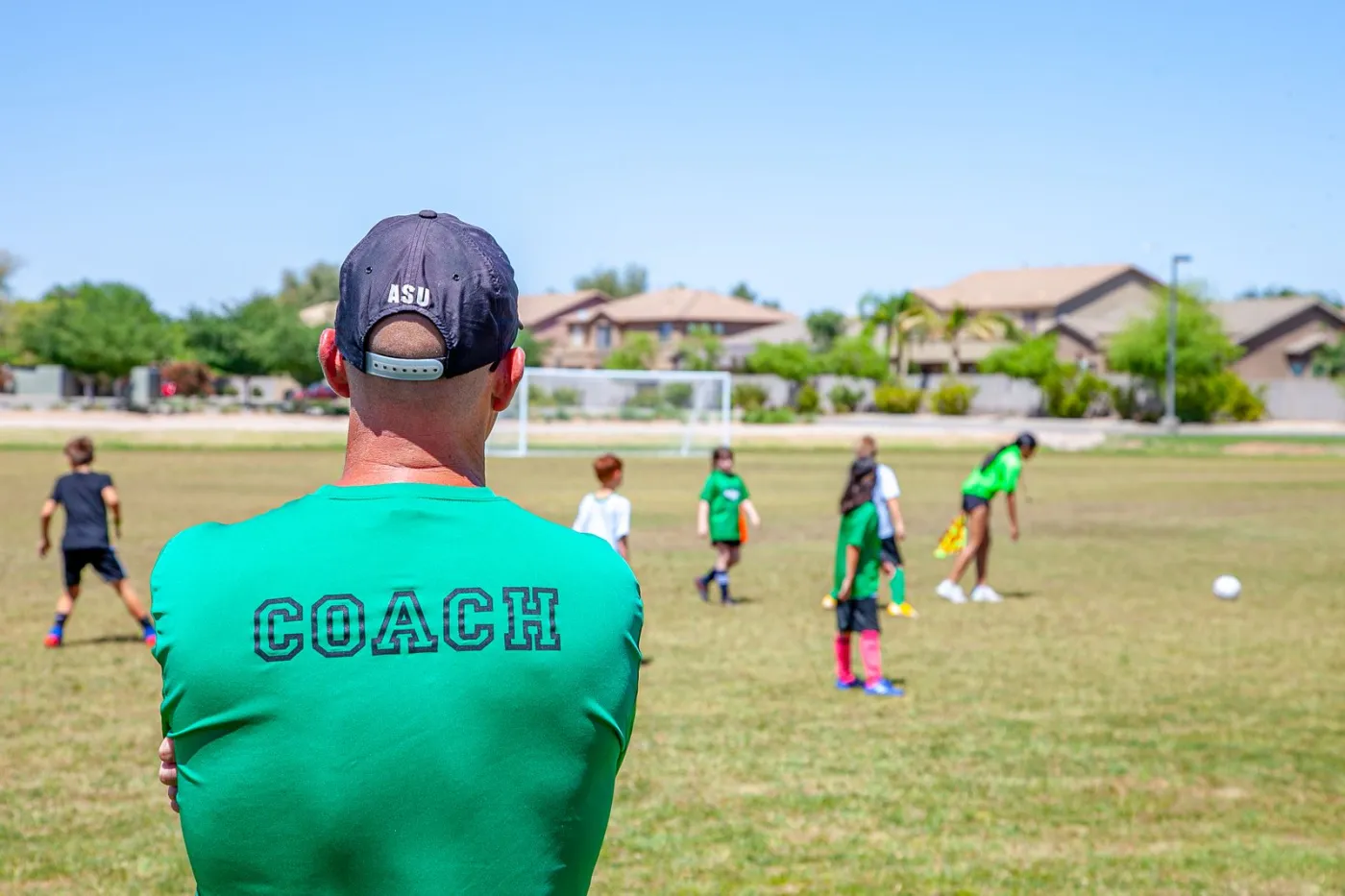
Who is cleared
Counted from the club's roster; the number changes as coaches clear. No names of children appear anywhere on this site.
Two adults, always
Two cleared adults at every practice and game. A coach is never alone with a player: not in a car, not in a changing room, not after practice waiting for a late parent. If a second adult cannot be there, practice is cancelled — and the club would rather cancel.
What a coach gets. A season's worth of practice plans by age, a kit bag with balls, cones and a first-aid kit, a licensed coach's course paid for by the club, and a club shirt. What a coach gives: two hours a week and a Saturday morning, for ten weeks.
Apply to coach
Demonstration form: it sends nothing and stores nothing. It shows what a real application checks first.